Building a capable video editing workstation no longer requires a massive budget. In 2025, the market is filled with powerful components and pre-built systems that offer exceptional performance for 1080p and even 4K editing without draining your finances. The key is knowing where to allocate your funds for the best real-world results in your editing timeline and playback.
Whether you are assembling a custom PC from the ground up or looking for a reliable pre-configured solution, this roundup highlights the best budget-friendly options. We have selected components and complete systems that prioritize the core needs of an editor: fast multi-core processors, ample RAM, speedy storage, and capable graphics cards for accelerated effects and rendering.
Our Top Picks for Budget Video Editing PCs
- CORSAIR VENGEANCE DDR5 RAM 64GB (2x32GB) 5200MHz
- MSI B760 Gaming Plus WiFi Gaming Motherboard
- WD_BLACK 2TB SN770 NVMe Internal Gaming SSD
- Seasonic FOCUS GX-850 – 850W – 80+ Gold
- XFX Speedster SWFT 210 Radeon RX 6600 CORE Gaming Graphics Card
- G.Skill RipJaws V Series 64GB (2 x 32GB) DDR4 3600
- ASUS Prime B660M-A D4 LGA 1700 mATX Motherboard
- Skytech Gaming Archangel Gaming PC Desktop – Intel Core i7 12700F
- Skytech Gaming Nebula Gaming PC Desktop – Intel Core i5 13400F
- Lenovo IdeaCentre 5i Desktop, Intel Core i5-13400, 16GB RAM, 1TB SSD
CORSAIR VENGEANCE DDR5 RAM 64GB (2x32GB) 5200MHz

For video editors, having enough RAM is non-negotiable, especially when working with high-resolution footage and multiple applications. This 64GB kit from Corsair provides a substantial amount of DDR5 memory, ensuring your system can handle large project files and complex timelines without slowing down. The increased bandwidth of DDR5 helps feed data to your CPU more efficiently, which translates to faster rendering and smoother playback in your editing software.
The onboard voltage regulation allows for stable performance tuning through Corsair’s iCUE software, giving you more control over your system’s memory performance. With a high capacity and the modern DDR5 architecture, this RAM is a solid foundation for a budget editing build that aims to be relevant for years to come.
MSI B760 Gaming Plus WiFi Gaming Motherboard

The MSI B760 Gaming Plus WiFi is an excellent ATX motherboard for building a modern video editing PC. It supports the latest 12th, 13th, and 14th Gen Intel processors, providing a clear upgrade path. Its support for DDR5 memory means you can take full advantage of the faster speeds that benefit data-heavy tasks like video editing.
This board is equipped with PCIe 4.0 and Lightning Gen 4 M.2 slots, which are perfect for installing a high-speed NVMe SSD as your primary drive for your operating system and editing software. The inclusion of Wi-Fi 6E and Bluetooth 5.3 offers great connectivity options without the need for additional expansion cards, keeping your build simple and cost-effective.
WD_BLACK 2TB SN770 NVMe Internal Gaming SSD
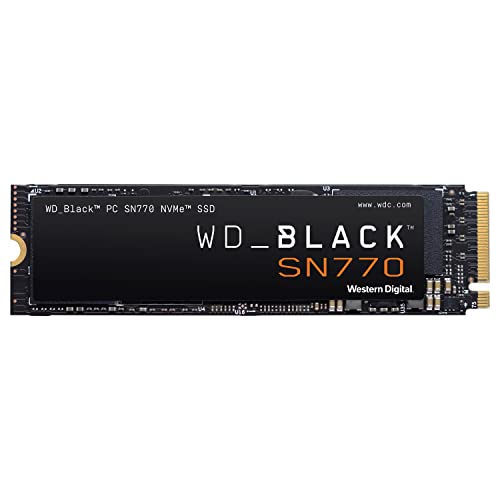
Speed is everything when it comes to loading large video files and project libraries. The WD_BLACK SN770 NVMe SSD offers Gen4 PCIe performance with read speeds up to 5,150 MB/s, which dramatically reduces load times and improves the overall responsiveness of your editing suite. This speed ensures that your source footage is readily available, minimizing stutter and lag during scrubbing through the timeline.
With a 2TB capacity, this drive provides ample space for your current projects, software, and assets. Using an NVMe SSD like this as your primary drive is one of the most effective upgrades you can make to improve the day-to-day experience of video editing on a budget.
Seasonic FOCUS GX-850 – 850W – 80+ Gold

A reliable power supply is the backbone of any stable PC build. The Seasonic FOCUS GX-850 offers 850 watts of continuous power with 80 Plus Gold certification, ensuring high energy efficiency and stable delivery to your components. This wattage provides plenty of headroom for a mid-range CPU and GPU combination, which is typical for a budget video editing workstation.
Its fully modular design is a significant advantage for cable management. You only connect the cables you need, which results in a cleaner interior with better airflow. Backed by a 10-year warranty, this power supply is a component you can trust for the long term.
XFX Speedster SWFT 210 Radeon RX 6600 CORE Gaming Graphics Card
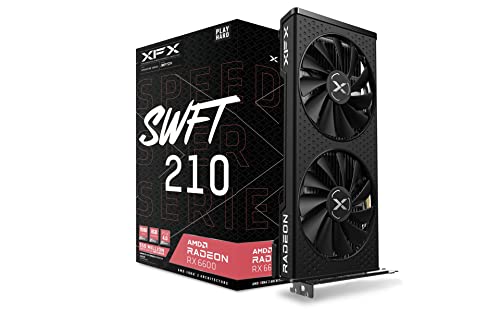
While primarily a gaming card, the Radeon RX 6600 offers solid performance for GPU-accelerated tasks in video editing applications. With 8GB of GDDR6 memory, it can handle many effects, color grading, and rendering processes that benefit from a dedicated graphics processor. This makes it a cost-effective choice for editors who need a performance boost over integrated graphics.
Based on the AMD RDNA 2 architecture, it provides a good balance of performance and power efficiency. For editors on a tight budget, this card delivers the necessary graphical power to speed up workflows without a significant investment.
G.Skill RipJaws V Series 64GB (2 x 32GB) DDR4 3600

If you are building a system based on a platform that uses DDR4 memory, this G.Skill RipJaws V 64GB kit is an outstanding option. It offers the same high capacity as its DDR5 counterpart but at a typically lower cost, allowing you to allocate more of your budget to the CPU or GPU. A large 64GB RAM pool is ideal for handling multiple 4K video streams, numerous plugins, and having other applications open simultaneously.
Running at 3600MHz with a CAS Latency of CL18, this memory provides strong performance that is well-suited for Intel and AMD systems. For a budget-conscious editing build that doesn’t require the latest DDR5 standard, this RAM delivers excellent value and capability.
ASUS Prime B660M-A D4 LGA 1700 mATX Motherboard
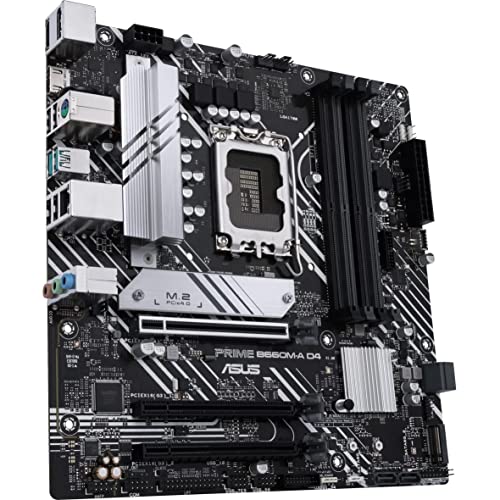
For a more compact and cost-effective build, the ASUS Prime B660M-A is a micro-ATX motherboard that supports 12th Gen Intel processors and DDR4 memory. This makes it a great centerpiece for a budget editing PC, as it allows you to use more affordable DDR4 RAM while still accessing modern CPU power.
It includes essential features like PCIe 4.0 for a fast primary SSD and multiple M.2 slots for storage expansion. The ASUS OptiMem II technology also helps with memory stability and overclocking, ensuring your system runs reliably even under the load of video rendering.
Skytech Gaming Archangel Gaming PC Desktop – Intel Core i7 12700F

This pre-built Skytech Archangel PC removes the guesswork from building a system. It is equipped with a 12-core Intel Core i7-12700F processor, which offers excellent multi-threaded performance for video editing tasks like encoding and rendering. The inclusion of an NVIDIA RTX 4060 graphics card provides dedicated GPU acceleration for supported effects and provides a smooth editing experience.
The system comes with a fast 1TB NVMe SSD and 16GB of DDR4 RAM, forming a solid foundation for a video editing workstation. It also includes a 240mm AIO liquid cooler for the CPU, which helps maintain performance during long rendering sessions by keeping temperatures in check.
Skytech Gaming Nebula Gaming PC Desktop – Intel Core i5 13400F

The Skytech Nebula is another compelling pre-built option, featuring a more recent Intel Core i5-13400F processor. With its 10-core architecture, it handles multi-threaded video editing workloads effectively. Paired with an RTX 4060 graphics card, this system is well-equipped for both editing and light gaming.
It shares many of the same benefits as its i7 counterpart, including a 1TB NVMe SSD and 16GB of RAM. For editors who are just starting or working primarily with 1080p footage, the i5-13400F provides a great balance of cost and performance, making this PC a very attractive budget-friendly solution.
Lenovo IdeaCentre 5i Desktop, Intel Core i5-13400, 16GB RAM, 1TB SSD
For those who prefer a system from a mainstream OEM, the Lenovo IdeaCentre 5i is a reliable choice. It is powered by an Intel Core i5-13400 processor, which includes performance cores for demanding tasks and efficient cores for background operations, making it a versatile CPU for editing. The included NVIDIA GeForce RTX 3060 is a proven GPU that offers solid acceleration for video editing applications.
With 16GB of RAM and a 1TB SSD, it meets the basic requirements for a smooth editing experience. This pre-built system is ideal for users who want a straightforward, out-of-the-box solution from a trusted brand without any assembly required.
What to Look For in a Budget PC For Video Editing in 2025
Putting together a 10 best budget PC for video editing in 2025 list means focusing on the components that give you the most performance for your money. I know how tempting it is to just look at the price tag, but a cheap PC that can’t handle your editing software is a waste of cash. Let’s break down what really matters when you’re shopping on a budget.
First up, the processor, or CPU, is the brain of the operation. For video editing, you want as many cores and threads as you can afford. In 2025, both AMD Ryzen and Intel Core processors are excellent, but I often find that AMD’s Ryzen 7 or Ryzen 9 series offers more cores for the price, which is a huge win for rendering times. Don’t go below a 6-core chip, but aim for 8 cores or more if your budget allows.
Next, RAM is your workspace. With 4K footage becoming the standard, 16GB is the absolute minimum I would recommend. However, 32GB is the new sweet spot for a smooth editing experience, especially if you like having multiple applications open or work with complex effects. Running out of RAM will cause your software to stutter and crash, so this is one area where a little extra investment pays off immediately.
The graphics card, or GPU, is crucial for effects, color grading, and playback. You don’t need the most expensive model, but a dedicated GPU from NVIDIA’s RTX 30 or 40 series, or AMD’s Radeon RX 6000 or 7000 series, is non-negotiable. Look for cards with at least 8GB of VRAM. The GPU accelerates tasks in most modern editing software, making your workflow significantly faster.
Storage speed is a secret weapon. I always recommend a two-drive setup: a fast NVMe SSD (512GB or 1TB) for your operating system and active project files, and a larger, cheaper hard drive (2TB or more) for archiving completed projects and storing your raw footage. This setup keeps your software snappy and your projects loading quickly.
Finally, don’t forget about connectivity and cooling. Make sure the PC has plenty of USB ports, including modern USB-C, and good airflow to prevent thermal throttling during long render sessions. By balancing these components, you can build or buy a machine that punches well above its weight.
FAQ
Can I really edit 4K video on a budget PC in 2025?
Absolutely. The technology has advanced so much that what was considered a high-end feature a few years ago is now accessible on a budget. The key is having the right components. A modern multi-core CPU, a dedicated GPU with its own video memory, and at least 16GB of RAM will allow you to edit 4K footage. You might need to use proxy files (lower-resolution versions of your footage for editing) for a perfectly smooth timeline, but the final exported video will be in full 4K quality.
Is it better to build my own PC or buy a pre-built system?
This is a classic question. Building your own PC can often save you money and allows you to hand-pick every single component for perfect balance. However, in 2025, many system integrators offer fantastic pre-built options that are very competitively priced, especially when you factor in the cost of a legitimate Windows license and the convenience of a single warranty. If you enjoy the process and want maximum control, build it yourself. If you want a plug-and-play solution with support, a pre-built system from a reputable brand is a great choice for your 10 best budget PC for video editing in 2025 search.
How much should I expect to spend on a decent budget editing PC?
The definition of “budget” can vary, but for a PC that can comfortably handle 1080p and 4K editing without constant frustration, I’d set a baseline of around $800 to $1,200 in 2025. In this range, you can find systems with a recent 6-core or 8-core CPU, 16GB-32GB of RAM, a dedicated GPU with 8GB of VRAM, and a fast SSD. Spending less than this often means compromising on a critical component like the graphics card, which will hurt your editing performance significantly.
What is the most important upgrade if my editing is slow?
If your current PC is struggling, the first thing I would check is your RAM usage while editing. If it’s maxed out, upgrading from 16GB to 32GB of RAM is often the most cost-effective performance boost. If you have enough RAM, then the next biggest impact usually comes from your storage. Moving your active project and media from a hard drive to a fast NVMe SSD can make timelines feel instantly more responsive. After that, consider a GPU or CPU upgrade, though these are typically more expensive changes.
Do I need a special monitor for video editing?
While you can edit on any monitor, a good display makes a difference for color accuracy. You don’t need a professional-grade monitor, but I recommend looking for an IPS panel for better color reproduction and viewing angles. For resolution, a 1440p monitor gives you more screen real estate for your editing software’s panels than a 1080p one. If color grading is a big part of your work, look for a monitor that covers a high percentage of the sRGB color gamut (close to 100% is ideal).