Choosing the right radiator fan is a critical decision for any PC builder or automotive enthusiast. The correct fan can mean the difference between a system that runs cool, quiet, and stable under load and one that suffers from thermal throttling or overheating. With so many options on the market, from high-static pressure PC case fans to robust universal automotive fans, finding the perfect balance of performance and acoustics can be a challenge.
This roundup is designed to simplify your search. We have compiled a list of ten standout radiator fans for 2025, carefully selected for their cooling capabilities, build quality, and innovative features. Whether you are optimizing a custom water-cooling loop or upgrading your vehicle’s cooling system, you will find a model here to meet your specific needs and performance requirements.
The Best Radiator Fans for Peak Performance
- Thermaltake ToughFan 12 High Static Pressure 2000 PWM (2 Pack)
- Scythe Kaze Flex 120mm Slim Fan, PWM 300-1800RPM
- ARCTIC P12 PWM – PC Fan, 120mm Case Fan with PWM
- NZXT AER P – High Performance Static Pressure Fans – 120mm
- Mishimoto MMFAN-16 Slim Electric Radiator Fan, 16″ Universal Fit
- Spal 30102049 16″ Curved Blade Performance Fan
- Derale 16749 Adjustable Fan Controller
- A-Premium Engine Radiator Cooling Fan Assembly for Infiniti/Nissan
- SPAL 30102120 16″ Puller Fan High Performance 1918 cfm
- Flex-a-lite 298 16-Inch Electric Fan
Thermaltake ToughFan 12 High Static Pressure 2000 PWM (2 Pack)
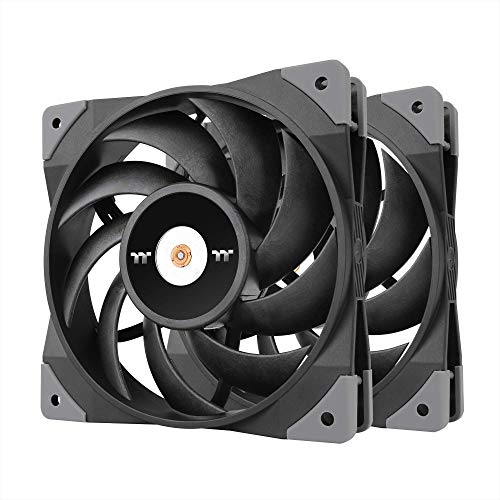
The Thermaltake ToughFan 12 is engineered for users who demand top-tier cooling performance. Its PWM control allows for precise speed adjustments, reaching a maximum of 2000 RPM to provide unparalleled cooling for high-TDP components and dense radiators. This makes it an excellent choice for overclocked systems and intensive computing tasks.
Durability and stability are central to its design. The fan blades are constructed from a special liquid crystal polymer (LCP) that minimizes vibration and maintains integrity at high speeds. Furthermore, the inclusion of a full steel motor hub enhances the fan’s overall stability and long-term reliability, ensuring consistent performance.
Scythe Kaze Flex 120mm Slim Fan
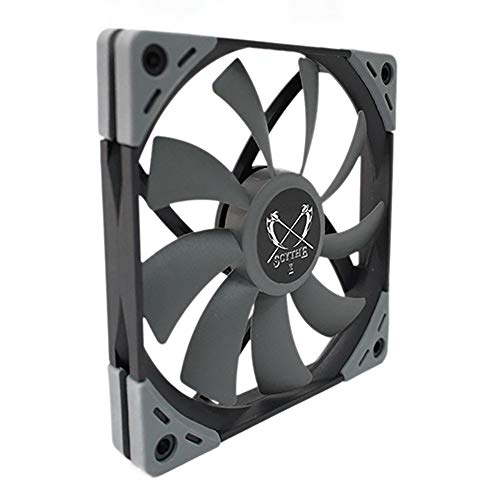
Space is a premium in many modern builds, and the Scythe Kaze Flex addresses this with its slim 15mm profile. This design is perfect for small form factor (SFF) cases, HTPCs, and low-profile CPU coolers where a standard 25mm fan simply will not fit. It provides a clever solution for adding necessary airflow in tight spaces.
Despite its slender frame, it does not compromise on quality or quiet operation. The fan utilizes a Sealed Precision Fluid Dynamic Bearing that is built to withstand high temperatures, reducing friction for smooth, silent running and a long operational life. Anti-vibration rubber pads on the corners further help to minimize noise by dampening any potential vibrations during use.
ARCTIC P12 PWM 120mm PC Fan

The ARCTIC P12 PWM has earned its reputation as a best-in-class value performer. It is specifically optimized for static pressure, making it exceptionally effective at pushing air through the fins of a radiator or a dense heatsink. This focus ensures that cooling potential is maximized even in restricted airflow situations.
With a PWM-controlled speed range of 200 to 1800 RPM, this fan remains nearly silent at lower speeds while providing strong cooling when system demand increases. The motor incorporates a modern Neodymium magnet ring, which improves efficiency and contributes to the fan’s reliable and quiet operation over a long lifespan.
NZXT AER P 120mm High Performance Fan

NZXT’s AER P fan is built for users who prioritize both high airflow and static pressure. Engineered with winglet fan blades and a chamfered intake and exhaust, it is designed to move a significant amount of air—up to 93.91 CFM—making it suitable for both case ventilation and radiator applications.
At the heart of this fan is a patented Fluid Dynamic Bearing (FDB) that is known for its quiet operation and durability, boasting a lifespan of over 60,000 hours. This combination of high-performance engineering and robust construction makes the AER P a reliable and effective cooling component for any high-performance PC build.
Mishimoto MMFAN-16 Slim Electric Radiator Fan

For automotive applications where space behind the radiator is limited, the Mishimoto 16-inch slim fan is an ideal solution. With an overall thickness of just 2.87 inches, it is designed to fit in compact engine bays without sacrificing cooling capacity. Its universal fitment makes it a versatile option for various custom installations.
This fan delivers robust performance with a capability of moving 1850 CFM at 1800 RPM. The ten straight blades are engineered to generate strong airflow, providing effective heat dissipation from your radiator to help maintain optimal engine temperatures during demanding driving conditions.
Spal 30102049 16″ Curved Blade Performance Fan

Spal is a respected name in automotive cooling, and this 16-inch model with curved blades is a testament to their expertise. Designed as a 12V puller fan, it is built to draw air efficiently through the radiator core. The curved blade design is often associated with moving high volumes of air while operating with less noise.
Manufactured in Italy, this fan is constructed to meet high quality standards. It is a reliable choice for enthusiasts and professionals looking for a durable and effective cooling fan for performance street cars, race applications, or other demanding automotive uses.
Derale 16749 Adjustable Fan Controller

An electric fan is only as good as its control system. The Derale adjustable fan controller allows you to precisely manage when your cooling fan activates. You can set the turn-on temperature anywhere between 150 and 240 degrees Fahrenheit, giving you complete command over your engine’s thermal management.
The controller features a preset turn-off temperature that is 10 degrees below your chosen turn-on point, preventing the fan from cycling on and off too frequently. It comes with a 3/8-inch NPT threaded probe for easy and secure installation into your radiator hose or engine block.
A-Premium Engine Radiator Cooling Fan Assembly

For owners of specific Infiniti and Nissan models, this A-Premium assembly offers a direct replacement for the OEM radiator fan. It is engineered to match the fit and function of the original part, ensuring a straightforward installation process without the need for modifications.
This complete assembly includes the fan motor and is designed to restore proper cooling system operation. It is compatible with a wide range of vehicles, including the Nissan 370Z and Infiniti G37, providing a reliable solution for maintaining your vehicle’s engine temperature.
SPAL 30102120 16″ Puller Fan

When maximum airflow is non-negotiable, the SPAL 30102120 stands out. This high-performance 16-inch puller fan delivers an impressive 1918 CFM, making it one of the most powerful options available. It is built to handle the rigorous cooling demands of high-performance engines, racing applications, and heavy-duty use.
The straight blade design is optimized for moving a massive volume of air, ensuring effective heat exchange even in extreme conditions. This fan is an excellent choice for race cars, motorcycles, ATVs, or any application where superior cooling performance is the top priority.
Flex-a-lite 298 16-Inch Electric Fan
The Flex-a-lite 298 is a well-regarded 16-inch electric fan known for its reliable performance in universal automotive applications. It is designed as a puller fan, effectively drawing air through the radiator to aid in engine cooling. This model is a popular choice for engine swaps and custom vehicle projects where a dependable cooling solution is needed.
Its design focuses on delivering strong airflow while maintaining a profile that fits in a variety of engine compartments. For those seeking a trusted brand name and proven performance for their classic car, hot rod, or custom build, the Flex-a-lite 298 is a solid contender.
Buying Guide: How to Choose the Best Radiator Fan for Your PC
Choosing the right radiator fan is more than just picking the one with the highest RPM. It’s about balancing performance, noise, and build quality to match your specific cooling needs. As someone who has built more than a few PCs, I can tell you that the fan you slap on your radiator can make or break your system’s cooling efficiency and acoustic profile. Let’s break down what you really need to consider.
First, let’s talk about static pressure. This is arguably the most critical spec for a radiator fan. Unlike case fans that just move air through open space, radiator fans have to push or pull air through the dense fins of your radiator. A fan with high static pressure is designed to do exactly that. If you use a standard case fan with low static pressure, you’ll end up with poor cooling performance and a lot of wasted energy. Look for fans that are explicitly marketed as “static pressure” or “radiator” fans.
Next up is noise, or more specifically, the noise-to-performance ratio. All fans make noise, but the goal is to find one that moves a lot of air without sounding like a jet engine. I pay close attention to the decibel (dBA) rating, but I also look for technologies that reduce motor hum and bearing noise. Hydraulic Dynamic Bearings (HDB) or Fluid Dynamic Bearings (FDB) are typically much quieter and have a longer lifespan than cheaper sleeve bearings, especially when mounted horizontally on a radiator.
Size and mounting are straightforward but essential. Most radiators use standard 120mm or 140mm fans. Make sure you know what size your radiator supports. A 140mm fan can often move the same amount of air as a 120mm fan but at a lower RPM, resulting in quieter operation. Also, check the thickness of the fan. While most are 25mm thick, some performance models are thicker, which might cause clearance issues in a tight case.
Finally, don’t ignore build quality and features. A well-built fan with robust materials will last longer and vibrate less. Rubber corner pads are a simple but effective feature for dampening vibrations. If you’re deep into customization, look for fans with addressable RGB lighting that can be synced with your other components. And of course, a good PWM (Pulse Width Modulation) connector is a must for modern motherboards, allowing for precise, automatic speed control based on your CPU’s temperature. Keeping these factors in mind will help you find the perfect balance for your build among the 10 best radiator fans in 2025 (performance and quiet models).
Frequently Asked Questions
What is the difference between static pressure and airflow fans?
This is a fundamental distinction. Airflow fans are designed to move a large volume of air freely through an open space, like the front or rear of your case. They have wider, more steeply angled blades. Static pressure fans, on the other hand, are built to force air through obstacles, like the tight fins of a radiator or a dust filter. They typically have blades that are closer together and often have a curved design to maintain focused pressure. Using a high-airflow fan on a radiator will usually result in worse cooling performance and more noise.
Are more expensive radiator fans really worth it?
From my experience, yes, but with a caveat. You hit a point of diminishing returns. A premium fan from a reputable brand often gets you a superior bearing (like an FDB), which translates to a much longer lifespan and significantly quieter operation, especially at lower speeds. You’re also paying for better build quality, reduced vibration, and sometimes advanced features like daisy-chaining for easier cable management. For a high-performance gaming rig or a quiet workstation, the investment is usually justified. For a budget build, a mid-range model often offers the best value.
Should I set my radiator fans to push or pull air?
This is a classic debate, and the simple answer is that, thermally, the difference is minimal. A push configuration mounts the fan to blow air through the radiator. A pull configuration sucks air through it. Push might have a slight edge in a perfectly clean environment, but pull is often easier to clean since dust collects on the easily accessible radiator surface instead of being stuck between the fan and radiator. Many enthusiasts even run a “push-pull” setup with fans on both sides for maximum performance, though this requires extra space and fans.
Can I use any 120mm fan on my AIO liquid cooler?
Technically, if it fits, you can. But I strongly advise against using just any fan. Most All-in-One (AIO) liquid coolers come with fans that are specifically tuned for high static pressure. Swapping them out for a generic case fan will almost certainly lead to higher CPU temperatures and potentially more noise as the fan struggles to push air. If you’re looking to replace the stock fans on your AIO, make sure you’re looking at the 10 best radiator fans in 2025 (performance and quiet models) to find a proper static pressure replacement.
How do I control the speed of my radiator fans?
There are two main ways: Voltage Control (DC) and Pulse Width Modulation (PWM). Most modern 4-pin fans are PWM. These are controlled by your motherboard and allow for very precise speed adjustments based on CPU temperature, which is ideal for radiator fans. You can set a custom fan curve in your motherboard’s BIOS or software so the fans spin slowly when you’re just browsing the web and ramp up only during intense gaming sessions. This is the best way to balance cooling and noise.