Finding the right graphics card that balances performance and budget is the key to building a powerful gaming rig without overspending. The sub-$500 market is fiercely competitive, offering a surprising level of power for high-fidelity 1080p and 1440p gaming. Whether you prioritize raw rasterization performance or cutting-edge features like ray tracing and AI upscaling, there is a compelling option for every type of gamer.
This roundup carefully selects the best GPUs from both Nvidia and AMD to help you make an informed decision. We’ve evaluated cards based on their architecture, memory configuration, cooling solutions, and unique features to bring you a curated list of top contenders that deliver exceptional value for your investment in 2025.
The Best Gaming Graphics Cards Under $500
- GIGABYTE PNY GeForce RTX 3060 Ti 8GB XLR8 Gaming Revel Epic-X RGB
- XFX Speedster QICK319 AMD Radeon RX 6700 XT Black Gaming Graphics Card
- ASUS ROG Strix NVIDIA GeForce RTX 3060 V2 OC Edition Gaming Graphics Card
- ASUS ROG Strix AMD Radeon RX 6600 XT OC Edition Gaming Graphics Card
- EVGA GeForce RTX 2060 12GB XC Gaming, GDDR6, Dual Fans, Metal Backplate
- ASUS Dual GeForce RTX 4060 OC Edition 8GB GDDR6
- XFX Speedster SWFT309 AMD Radeon RX 6700 XT CORE Gaming 12GB
- GIGABYTE GeForce RTX 4060 Ti EAGLE OC 8G
GIGABYTE PNY GeForce RTX 3060 Ti 8GB XLR8 Gaming Revel Epic-X RGB

Built on NVIDIA’s efficient Ampere architecture, the RTX 3060 Ti is a legendary performer in its class. With 4864 CUDA cores and a boost clock speed of 1665MHz, this card handles demanding games with ease, providing a smooth and responsive gaming experience at 1080p and 1440p resolutions. Its 8GB of GDDR6 VRAM, paired with a 256-bit memory interface and 448GB/sec of bandwidth, ensures that even texture-heavy games run with striking visual clarity.
The EPIC-X RGB cooling solution not only keeps temperatures in check during intense sessions but also adds a brilliant aesthetic touch to your build. The dual-fan design is engineered for effective heat dissipation, allowing the GPU to maintain high performance. This combination of raw power and customizable RGB lighting makes it a solid foundation for any gaming PC.
XFX Speedster QICK319 AMD Radeon RX 6700 XT Black Gaming Graphics Card
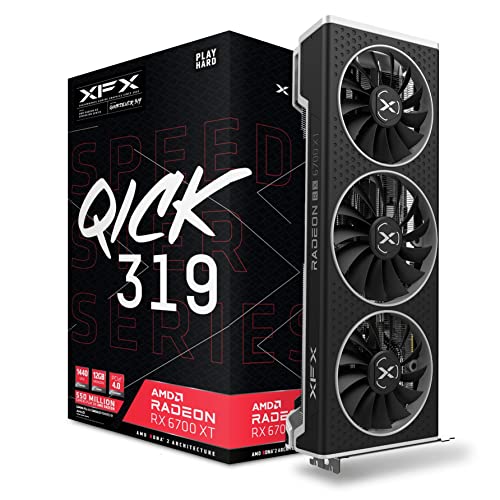
The XFX Speedster QICK319 RX 6700 XT is a powerhouse for gamers focused on high-refresh-rate 1440p gameplay. It is equipped with 12GB of high-speed GDDR6 memory, which is a significant advantage for modern games with large texture packs. The AMD RDNA 2 architecture at its core delivers a substantial leap in performance and power efficiency over previous generations.
This model stands out with its robust cooling shroud and triple-fan design, which work in tandem to manage heat effectively, ensuring consistent clock speeds during long gaming marathons. The generous 12GB VRAM buffer makes it a forward-thinking choice for gaming at higher resolutions and for content creation tasks, offering great longevity for your investment.
ASUS ROG Strix NVIDIA GeForce RTX 3060 V2 OC Edition Gaming Graphics Card

ASUS’s ROG Strix series is synonymous with premium quality and top-tier performance. This RTX 3060 V2 OC Edition leverages the Ampere architecture to its fullest, featuring 2nd Generation RT Cores for realistic ray tracing and 3rd Generation Tensor Cores for DLSS AI-powered performance boosts. The 12GB of GDDR6 memory is a standout feature, providing ample headroom for high-resolution textures and mods.
Its cooling is where the card truly excels. The Axial-tech fan design uses a larger, barrier ring that increases downward air pressure to push more heat away from the heatsink. Combined with a 2.7-slot design and Super Alloy Power II components, this card offers exceptional thermal and electrical performance right out of the box, making it a reliable and cool-running option.
ASUS ROG Strix AMD Radeon RX 6600 XT OC Edition Gaming Graphics Card

Targeting the high-performance 1080p gaming market, the ASUS ROG Strix RX 6600 XT is built on the efficient AMD RDNA 2 architecture. It’s engineered to deliver exceptionally high frame rates in today’s most popular titles, making it an ideal partner for high-refresh-rate monitors. The 8GB of GDDR6 memory is well-suited for its intended resolution and gaming scenarios.
This card benefits from the same premium cooling found in its larger siblings. The Axial-tech fans with their smaller hub and longer blades move a large volume of air, while the dual ball fan bearings are rated for a much longer lifespan than standard designs. This focus on build quality and thermal performance ensures the card remains quiet and cool, preserving its performance over time.
EVGA GeForce RTX 2060 12GB XC Gaming
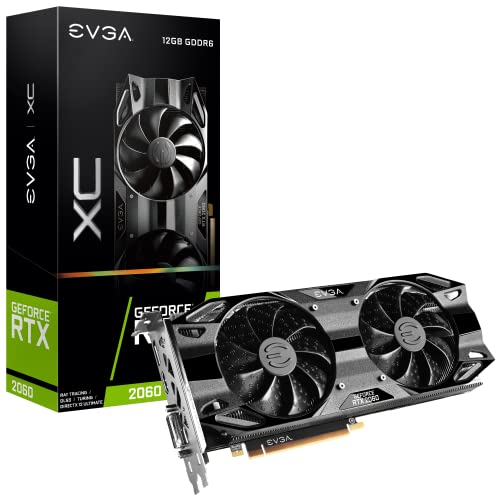
The EVGA GeForce RTX 2060 12GB model offers a compelling entry point into the world of real-time ray tracing and AI-enhanced gaming. While based on the previous-generation Turing architecture, it remains a capable 1080p performer. The increased 12GB of GDDR6 memory is its primary advantage, allowing it to handle games that are more demanding on VRAM than the original 6GB model.
Featuring a dual-fan cooling solution and a sturdy metal backplate, this card from EVGA provides reliable thermal performance and structural integrity. The inclusion of technologies like DLSS helps to boost frame rates in supported titles, giving this veteran GPU a new lease on life for budget-conscious builders who need more VRAM.
ASUS Dual GeForce RTX 4060 OC Edition 8GB GDDR6
Representing the latest in GPU technology, the ASUS Dual RTX 4060 brings the efficiency of the NVIDIA Ada Lovelace architecture to the mainstream market. It introduces significant improvements in performance per watt, along with more advanced 3rd Generation RT Cores and 4th Generation Tensor Cores that power DLSS 3 with Frame Generation. This technology can dramatically increase frame rates in supported games.
The Dual series from ASUS offers a no-frills, highly effective cooling solution with two axial-flow fans that keep the card running quietly and efficiently. For gamers looking to upgrade from an older generation card, the RTX 4060 provides a modern feature set and excellent 1080p performance with the headroom to handle some 1440p gaming, all while typically requiring less power.
XFX Speedster SWFT309 AMD Radeon RX 6700 XT CORE Gaming 12GB
Another excellent variant of the popular RX 6700 XT, the XFX Speedster SWFT309 model focuses on delivering exceptional value and performance. It shares the same core specs as other 6700 XT cards, including the 12GB GDDR6 memory and RDNA 2 architecture, making it a formidable contender for smooth 1440p gaming. This model is designed for gamers who want high frame rates without unnecessary extras.
The SWFT309 cooling system is engineered for reliability and efficiency, featuring a streamlined shroud and multiple fans to dissipate heat effectively. Its performance profile makes it a direct competitor to similarly priced Nvidia cards, often offering superior raw rasterization performance in traditional gaming, which is a major benefit for those who do not heavily utilize ray tracing.
GIGABYTE GeForce RTX 4060 Ti EAGLE OC 8G
The GIGABYTE RTX 4060 Ti EAGLE OC sits at the higher end of this budget category, offering a taste of the Ada Lovelace architecture’s best features for under $500. With performance that often rivals last generation’s high-end cards, the 4060 Ti is excellent for maxed-out 1080p gaming and very capable at 1440p. The inclusion of DLSS 3 is a game-changer, using AI to generate frames for a massive performance uplift.
GIGABYTE’s EAGLE series provides a robust cooling solution with its alternate spinning fans, which reduce turbulence and improve heat dissipation. The metal backplate adds to the card’s durability and aesthetic. For those seeking a modern GPU with advanced features like AV1 encoding and the highest efficiency, the RTX 4060 Ti is a very strong candidate.
Buying Guide: What to Look For in a Gaming Graphics Card Under $500
Choosing the right graphics card for your gaming PC can feel like a big decision, especially when you’re working with a budget. I always tell my friends that the sub-$500 market is the sweet spot for getting incredible performance without breaking the bank. In 2025, both Nvidia and AMD have fantastic options in this range, but you need to know what to look for beyond just the brand name.
First, let’s talk about VRAM. This is the memory on the card itself, and games are using more of it than ever. For 2025, I consider 12GB to be the new comfortable minimum for playing at 1440p with high-resolution textures. While 8GB can still work for 1080p, you might find yourself turning down settings in newer titles to avoid stuttering. If you can find a card with 16GB or more under $500, like some AMD models, it’s a huge win for future-proofing.
Next is raw performance, which is often tied to the chipset architecture. For Nvidia, you’re looking at the Ada Lovelace-based RTX 40-series cards, while AMD offers their RDNA 3 architecture in the RX 7000 series. I pay close attention to benchmarks for the specific games I play. A card might have a great price, but if it struggles with my favorite game engines, it’s not the one for me. Don’t just look at average frame rates; look at the 1% lows, as this tells you how smooth the experience will be during hectic action.
Features are another major differentiator. Nvidia’s DLSS 3 and its frame generation technology are a game-changer for boosting frame rates in supported titles. AMD’s answer, FSR 3, is also excellent and works on both AMD and Nvidia hardware, giving you more flexibility. If you care about ray tracing, Nvidia still holds a slight edge, but AMD has closed the gap significantly with its latest generation. Finally, never forget about your power supply. A more powerful card needs a capable PSU and the right power connectors. I always check the recommended wattage and make sure my case has enough physical space and airflow for the card I want. Balancing all these factors is the key to picking one of the 8 best gaming graphics cards under $500 in 2025 that is perfect for your setup.
FAQ
Is an Nvidia or AMD graphics card better for under $500 in 2025?
This is the eternal question, and the answer is: it depends on your priorities. In this price bracket, both companies offer compelling options. Nvidia typically excels in ray tracing performance and has its proprietary DLSS upscaling technology, which is fantastic. AMD often provides more VRAM for your money and their raw rasterization performance (traditional rendering) is extremely competitive. I recommend looking at benchmarks for the specific games you play to see which brand performs better there.
How long will a $500 graphics card last?
A good graphics card in this price range should comfortably last you for several years of great gaming. You can expect to play modern titles at 1440p resolution with high settings for the foreseeable future. As games become more demanding, you might need to rely more on upscaling technologies like DLSS or FSR in a few years to maintain high frame rates, but the card itself will remain viable. It’s a solid investment for a solid gaming experience.
Can I play games at 1440p with a graphics card under $500?
Absolutely. This is one of the primary strengths of the modern sub-$500 GPU market. Cards in this segment are specifically targeted at delivering excellent 1440p gaming performance. You’ll be able to hit high frame rates in most esports titles and enjoy a smooth 60+ FPS experience in more demanding AAA games, especially when you enable upscaling. It’s the perfect resolution for these cards.
Is used or refurbished a good option to save money?
It can be, but you have to be careful. The market for used graphics cards is always active. The main risk is not knowing how hard the previous owner ran the card, especially if it was used for crypto mining. If you go this route, I strongly suggest buying from a reputable source that offers a warranty. For many, the peace of mind that comes with a new product and a full manufacturer’s warranty is worth the extra cost when selecting from the 8 best gaming graphics cards under $500 in 2025.
How important is VRAM for future-proofing?
It’s becoming increasingly important. As game textures and assets get more detailed, they consume more video memory. While 8GB was once the standard, I now consider 12GB to be a much safer starting point for a new card in 2025 if you plan to keep it for a while. Having more VRAM helps prevent stuttering and allows you to use higher-resolution texture packs, making your games look better for longer. It’s a key spec to watch.