Building a streaming PC in 2025 requires a graphics card that can handle two demanding tasks simultaneously: running the latest games at high settings and encoding a flawless video feed for your audience. The right GPU is the engine of your stream, ensuring your gameplay is smooth and your broadcast quality is crisp and professional. With technologies like NVIDIA’s NVENC and AMD’s AMF encoders built directly into the hardware, modern graphics cards take the performance burden off your CPU, allowing you to stream without compromising your in-game experience.
This roundup focuses on high-performance GPUs that excel in a streaming environment. We have evaluated cards across different performance tiers and from both major chipset manufacturers to help you find the perfect balance of gaming power and broadcast capability for your setup and budget. Whether you are a competitive gamer targeting high frame rates or a content creator pushing 4K resolution, there is an ideal card here for your streaming ambitions.
The Best Graphics Cards for Streamers in 2025
- ASUS TUF Gaming GeForce RTX® 4080 OC Edition
- MSI Gaming GeForce RTX 4090 Gaming X Trio
- XFX Speedster MERC310 AMD Radeon RX 7900XTX Black
- MSI GeForce RTX 4070 Ti Ventus 3X 12G OC
- ZOTAC GeForce RTX 3070 Ti Trinity OC
- GIGABYTE GeForce RTX 3060 Eagle OC 12G
- MSI Gaming AMD Radeon RX 6600 XT
- ASUS TUF Gaming NVIDIA GeForce GTX 1660 Ti EVO OC
- VIPERA NVIDIA GeForce RTX 4090 Founders Edition
- ASUS ROG Strix GeForce RTX 4090 OC Edition
ASUS TUF Gaming GeForce RTX® 4080 OC Edition

The ASUS TUF Gaming RTX 4080 is a powerhouse designed for streamers who refuse to compromise. Built on the NVIDIA Ada Lovelace architecture, it delivers exceptional performance and power efficiency, allowing you to game at high resolutions while your stream encodes seamlessly in the background. Its 16GB of high-speed GDDR6X memory is more than sufficient for the most demanding games and multitasking scenarios.
For broadcasters, the 4th Generation Tensor Cores provide a significant boost to AI-driven features, enhancing your stream with advanced noise removal and background removal tools without a noticeable performance impact. Combined with the robust cooling solution from ASUS, this card maintains stable clock speeds during long streaming sessions, ensuring a consistent and high-quality viewer experience.
MSI Gaming GeForce RTX 4090 Gaming X Trio

Sitting at the apex of gaming performance, the MSI RTX 4090 is the ultimate graphics card for the professional streamer. With a massive 24GB of GDDR6X VRAM, it is built to handle 4K gaming and streaming simultaneously, along with intensive production work like video editing and rendering. The Ada Lovelace architecture’s capabilities are fully realized here, providing unmatched frame rates and visual fidelity.
Streamers will appreciate the sheer overhead this card provides; you can play any title with all settings maxed out while using the efficient NVENC encoder for a pristine broadcast. MSI’s Tri-Frozr 3 cooling system is critical for managing the thermal output of this high-performance GPU, ensuring it remains cool and quiet even under the combined load of gaming and encoding, which is essential for maintaining a professional audio feed.
XFX Speedster MERC310 AMD Radeon RX 7900XTX Black

For streamers who prefer Team Red, the XFX Speedster MERC310 RX 7900 XTX is a top-tier contender. Its AMD RDNA 3 architecture and 24GB of GDDR6 memory offer tremendous gaming performance, making it a strong choice for high-resolution streaming. The advanced chiplet design and AI acceleration contribute to a powerful and efficient gaming experience that forms a solid foundation for any broadcast.
The card’s streaming prowess is backed by AMD’s AMF encoder, which provides high-quality H.264 and H.265/HEVC encoding. XFX’s MERC Triple Fan Cooling Solution ensures that thermal performance is kept in check, allowing the GPU to sustain high boost clocks. This makes it a reliable workhorse for streamers who engage in marathon sessions and need consistent performance from start to finish.
MSI GeForce RTX 4070 Ti Ventus 3X 12G OC

The MSI RTX 4070 Ti Ventus 3X strikes an excellent balance between performance and value for serious streamers. It leverages the Ada Lovelace architecture to deliver superb 1440p and solid 4K gaming performance, which pairs perfectly with NVIDIA’s broadcast suite. The 12GB of GDDR6X memory is well-suited for modern games and streaming applications.
MSI’s focus on cooling with the TORX FAN 4.0 system and precision Core Pipes means this card operates quietly and efficiently. This is a significant advantage for streamers, as microphone pick-up of fan noise can be a major issue. The reliable thermal performance ensures that the NVENC encoder can work without any thermal throttling, resulting in a smooth and stable stream for your audience.
ZOTAC GeForce RTX 3070 Ti Trinity OC

Based on the capable Ampere architecture, the ZOTAC RTX 3070 Ti remains a compelling option for streamers in 2025. It offers strong 1440p gaming performance and access to NVIDIA’s seventh-generation NVENC encoder, which provides excellent streaming quality with minimal impact on frame rates. The 8GB of GDDR6X memory handles most games with ease.
ZOTAC’s IceStorm 2.0 cooling keeps the card running at optimal temperatures, which is vital for maintaining encoding quality during long streams. For streamers looking for high frame rates at 1440p without needing the absolute latest hardware, this card represents a solid and reliable choice that continues to deliver a premium broadcasting experience.
GIGABYTE GeForce RTX 3060 Eagle OC 12G

The GIGABYTE RTX 3060 Eagle is an excellent entry point for new streamers building their first dedicated rig. Its 12GB of VRAM is a notable advantage for modern games and multitasking, while the NVIDIA Ampere architecture provides the efficient NVENC encoder that has become the standard for quality game streaming. This card handles 1080p and 1440p gaming very well.
With its dual WINDFORCE fans, the card maintains a cool and quiet operation, which is ideal for a streaming environment where noise levels are a concern. For those on a budget, the RTX 3060 offers a fantastic feature set that allows you to produce a high-quality stream without requiring a top-shelf investment.
MSI Gaming AMD Radeon RX 6600 XT

The MSI RX 6600 XT is a solid budget-friendly AMD option for streamers focused on 1080p resolution. It delivers high frame rates in its target resolution, and with AMD’s continuous driver improvements, its AMF encoder provides a capable solution for broadcasting. The 8GB of GDDR6 memory is sufficient for most games at this quality level.
MSI’s Torx Fan cooling and RGB lighting add to the card’s appeal, providing effective thermal management and a customizable look for your stream setup. For gamers who primarily stream in 1080p and want a smooth, responsive experience without breaking the bank, the RX 6600 XT presents a very practical solution.
ASUS TUF Gaming NVIDIA GeForce GTX 1660 Ti EVO OC
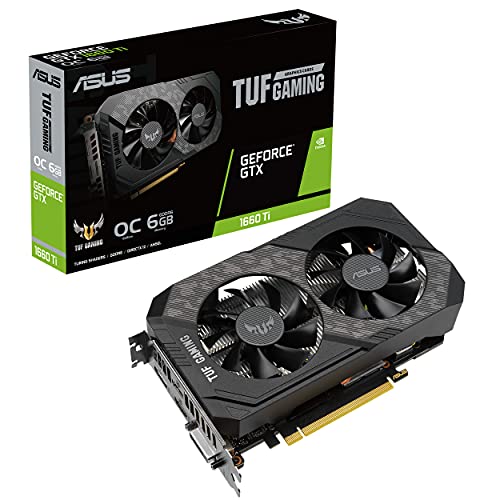
The ASUS TUF GTX 1660 Ti is a proven veteran that remains a viable option for entry-level streaming. While it lacks the dedicated AI cores of the RTX series, its Turing-based NVENC encoder is still highly capable and a significant step up from CPU encoding. It is specifically optimized for popular broadcasting software like OBS.
This card is built for reliability, with a compact design and space-grade lubricant in its fans for a longer lifespan. For streamers on a very tight budget who still want to produce a decent quality 1080p stream, the GTX 1660 Ti offers a dependable and accessible path to get started with game broadcasting.
VIPERA NVIDIA GeForce RTX 4090 Founders Edition

The VIPERA RTX 4090 Founders Edition represents the peak of NVIDIA’s reference design, offering the same formidable performance as other 4090 models. With its 24GB of GDDR6X memory and the full might of the Ada Lovelace architecture, it is engineered for streamers and creators who demand the absolute best. It can effortlessly manage 4K gaming at high refresh rates while encoding a multi-source broadcast.
The Founders Edition cooler is known for its efficient and distinctive flow-through design, which effectively manages heat in a variety of PC case configurations. For the streamer who wants a no-compromise build and the prestige of a reference card, this model delivers exceptional performance and a sleek aesthetic.
ASUS ROG Strix GeForce RTX 4090 OC Edition
The ASUS ROG Strix RTX 4090 OC Edition is the pinnacle of custom graphics cards, designed for elite streamers and performance enthusiasts. It takes the already incredible foundation of the RTX 4090 and enhances it with higher out-of-the-box clock speeds and a superior cooling solution. This means even more performance headroom for the most demanding games and streaming setups.
ASUS’s robust cooling array, including more heatpipes and a larger heatsink, ensures that the GPU remains at low temperatures, promoting higher sustained boost clocks and quieter operation. This is critical for maintaining encoding stability during long broadcasts. For those building a showcase streaming PC where every frame and every degree matters, the ROG Strix model is a top-tier selection.
Buying Guide: How to Choose the Best Graphics Card for Streaming in 2025
Choosing the right graphics card for streaming in 2025 is about more than just raw gaming power. You need a component that can handle rendering your game and encoding the video stream simultaneously without breaking a sweat. As someone who has built several streaming PCs, I focus on a few key areas to get the best performance for my money.
First, look at the encoder. This is the single most important feature for a streaming graphics card. Both NVIDIA and AMD have dedicated hardware encoders: NVENC on NVIDIA cards and AMF on AMD cards. For the best graphics cards for streaming in 2025, you want the latest version of these encoders. NVIDIA’s latest NVENC offers exceptional efficiency, meaning you get a cleaner-looking stream at the same bitrate compared to older hardware or software encoding. AMD has made huge strides, and their most recent AMF is very competitive, especially for AV1 encoding. Speaking of which, AV1 is the new king of streaming codecs. It provides superior image quality over H.264 and even H.265 at lower bitrates, which is perfect for platforms like YouTube and Twitch. A card with a dedicated AV1 encoder is a future-proof investment.
Next, consider VRAM. While 8GB was once enough, modern games and higher-resolution textures are demanding more. For a smooth streaming experience at 1080p or 1440p, I consider 12GB to be a comfortable starting point in 2025. If you plan on streaming at 4K or using high-resolution mods, 16GB or more will give you the headroom you need to avoid stutters and frame drops. You don’t want to run out of VRAM in the middle of a broadcast.
Finally, think about your overall system balance. A powerful GPU can be held back by a slow CPU or insufficient RAM. For a dedicated streaming PC, you might get away with a less powerful CPU since the GPU’s encoder is doing all the heavy lifting. For a single-PC setup where you game and stream on the same machine, you still need a competent CPU, but a good encoder significantly reduces its load. Pair your new graphics card with at least 16GB of fast RAM and a modern processor to create a seamless streaming powerhouse.
FAQ
Is NVIDIA or AMD better for streaming in 2025?
This is a tight race in 2025. NVIDIA has historically held the lead with its NVENC encoder, which is renowned for its efficiency and quality. However, AMD has closed the gap significantly with its latest generation of cards and their improved AMF encoder, especially with AV1 support. For most streamers, both are excellent choices. If your priority is the absolute best perceived quality at a given bitrate, NVIDIA still has a slight edge. But for pure value and fantastic AV1 performance, AMD is a very strong contender for the best graphics cards for streaming in 2025.
How much VRAM do I need on a graphics card for streaming?
My recommendation for 2025 is to aim for at least 12GB of VRAM. Games are continually using more video memory for high-resolution textures and assets. When you stream, your GPU is not only rendering the game but also handling the encoding process. Having extra VRAM prevents bottlenecks that can cause in-game stuttering or encoding issues. For 1080p streaming, 12GB is plenty. If you are a 1440p or 4K streamer, looking at cards with 16GB or more is a smart move to ensure your setup remains smooth for years to come.
What is AV1 encoding and why is it important?
AV1 is a new, open-source video codec that is much more efficient than older standards like H.264. Think of it as a better way to compress video. This efficiency means you can stream a higher-quality picture at the same internet upload speed, or maintain your current quality with a lower bitrate. Major platforms like YouTube and Twitch now support AV1 playback, making it a key feature for modern streamers. Having a graphics card with a dedicated AV1 encoder is a significant advantage for future-proofing your stream’s quality.
Can I use a single PC for both gaming and streaming?
Absolutely. This is the most common setup, and modern graphics cards are built for it. The dedicated encoder chip (NVENC or AMF) on your GPU handles the video encoding load independently from the cores that render your game. This means the performance hit on your game is minimal. A single, well-configured PC with a powerful GPU is a completely viable and effective way to produce a high-quality stream without needing a separate, dedicated encoding machine.
Do I need the most expensive graphics card to start streaming?
Not at all. While high-end cards offer the best performance, you do not need a top-tier model to start streaming. Mid-range cards from the current or previous generation often include the same high-quality encoder as their more expensive siblings. You can get a fantastic streaming experience from a card that balances good gaming performance with a modern encoder without spending a fortune. Focus on getting a card with a current-generation encoder and sufficient VRAM for your games, rather than just chasing the highest price tag.