For competitive gamers and enthusiasts, achieving a consistent 240 frames per second at 1080p resolution is the ultimate goal for buttery-smooth, responsive gameplay. This demanding target requires a graphics card that is not just powerful, but exceptionally so, capable of pushing high frame rates even in the most graphically intensive titles. Moving beyond standard 60Hz or even 144Hz gaming, a 240Hz experience minimizes motion blur and input lag, providing a tangible edge in fast-paced shooters and action games.
Navigating the vast selection of GPUs to find the right one for this specific task can be challenging. This roundup simplifies your search by highlighting nine of the best graphics cards available in 2025 that are engineered to meet the rigorous demands of 1080p 240Hz gaming. We have analyzed performance benchmarks and features across different price points and architectures to help you make an informed decision for your next high-refresh-rate upgrade.
Our Top Graphics Card Picks for 1080p 240Hz Gaming
- EVGA GeForce RTX 3090 Ti FTW3 Ultra Gaming, 24GB GDDR6X
- EVGA GeForce RTX 3080 Ti XC3 Ultra Gaming, 12GB GDDR6X
- PowerColor Red Dragon AMD Radeon RX 6800 XT Gaming Graphics Card
- ASUS TUF Gaming NVIDIA GeForce RTX 3070 Ti OC Edition Graphics Card
- XFX Speedster SWFT309 AMD Radeon RX 6700 XT CORE Gaming Graphics Card
- MSI Gaming GeForce RTX 3060 Ti LHR 8GB GDRR6, Ampere Architecture
- MSI Gaming AMD Radeon RX 6600 XT 128-bit 8GB GDDR6 OC Graphics Card
- ASUS TUF Gaming NVIDIA GeForce RTX 4070 OC Edition Graphics Card
- MSI Gaming GeForce RTX 4060 Ti 16GB GAMING X SLIM Graphics Card
EVGA GeForce RTX 3090 Ti FTW3 Ultra Gaming

The EVGA RTX 3090 Ti FTW3 Ultra is an absolute powerhouse, representing the peak of gaming performance. With its massive 24GB of GDDR6X memory and a high boost clock of 1920 MHz, this card is built to effortlessly surpass the 240 FPS mark at 1080p in any game, even with settings maximized. It is designed for users who demand the very best and refuse to compromise on frame rates or visual fidelity.
Advanced cooling is critical for a GPU of this caliber, and the Vapor Chamber Cooling system with triple fans delivers. Combined with nine iCX3 thermal sensors, it maintains optimal temperatures under heavy loads, ensuring sustained peak performance while keeping acoustic noise to a minimum. Features like real-time ray tracing provide hyper-realistic lighting and reflections, making it a complete package for a premium gaming experience.
EVGA GeForce RTX 3080 Ti XC3 Ultra Gaming
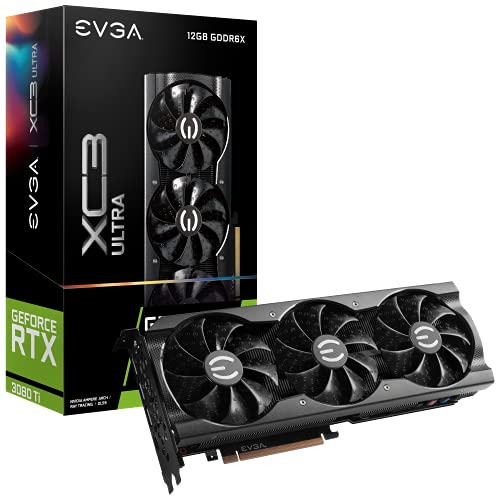
Offering exceptional performance just a step below the 3090 Ti, the EVGA RTX 3080 Ti XC3 Ultra is a formidable contender for 240Hz gaming. Its 12GB of high-speed GDDR6X memory and 1725 MHz boost clock provide the necessary horsepower to drive demanding games to extremely high frame rates. This card strikes an excellent balance between top-tier performance and a more practical power envelope.
The iCX3 cooling technology with triple fans ensures that the GPU remains cool and quiet during intense gaming sessions, preventing thermal throttling and maintaining consistent performance. With support for advanced features like real-time ray tracing, this card not only achieves high frame rates but also delivers stunning visual effects, making it a superb choice for gamers who want both speed and image quality.
PowerColor Red Dragon AMD Radeon RX 6800 XT

The PowerColor Red Dragon RX 6800 XT is AMD’s answer to high-refresh-rate gaming, built on the efficient RDNA 2 architecture. With 16GB of GDDR6 memory, it provides ample resources for high-resolution textures and future-proofing. This card is particularly strong in traditional rasterization performance, making it a fantastic option for hitting 240 FPS in games that do not heavily rely on ray tracing.
Key technologies like AMD Infinity Cache significantly reduce latency and increase effective bandwidth, which is crucial for achieving high frame rates. The custom Red Dragon cooler provides robust thermal dissipation, ensuring the GPU can maintain its boost clocks during extended play. For gamers who prioritize raw FPS power in a wide range of titles, the RX 6800 XT is a compelling and often competitive alternative.
ASUS TUF Gaming NVIDIA GeForce RTX 3070 Ti OC Edition
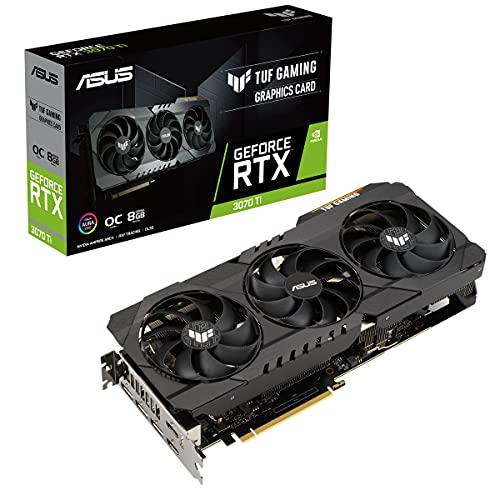
The ASUS TUF Gaming RTX 3070 Ti OC Edition is a well-rounded card that brings excellent performance to the high-refresh-rate arena. Leveraging NVIDIA’s Ampere architecture, it offers a significant boost in FP32 throughput and power efficiency. With 8GB of speedy GDDR6X memory, it handles 1080p gaming with ease, consistently delivering high frame rates in esports and AAA titles.
ASUS’s TUF series is renowned for its durability, featuring military-grade certifications and components chosen for their resilience. The card’s cooling solution, with dual ball fan bearings, is built for longevity and quiet operation. Second-generation RT Cores provide improved ray tracing performance, allowing you to experience advanced lighting effects without as steep a performance penalty, making it a great value-oriented high-performance choice.
XFX Speedster SWFT309 AMD Radeon RX 6700 XT CORE

Positioned as a strong mid-range contender, the XFX Speedster RX 6700 XT is more than capable of powering a 1080p 240Hz monitor, especially in optimized or less demanding games. Its 12GB of GDDR6 memory is a significant asset, providing plenty of headroom for modern games. The high memory speed of 16 Gbps ensures that data flows quickly to the GPU, minimizing bottlenecks.
Built on the AMD RDNA 2 architecture, this card delivers a strong performance-per-dollar ratio. The SWFT309 cooler is designed for efficient heat dissipation, keeping the card running at optimal speeds during marathon gaming sessions. For gamers seeking a balance between cost and performance, the RX 6700 XT represents a very sensible path to high frame rate gaming.
MSI Gaming GeForce RTX 3060 Ti
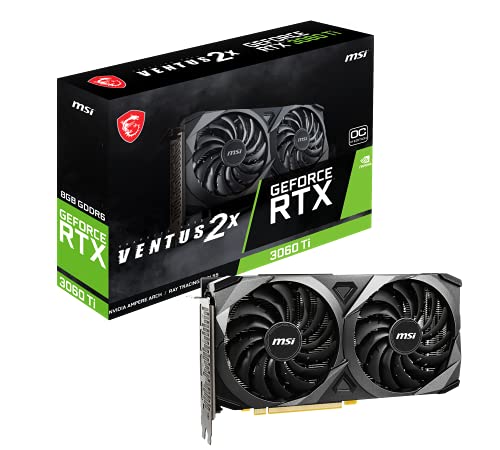
The MSI Gaming GeForce RTX 3060 Ti has long been celebrated as a sweet spot for high-performance gaming, and it remains a valid option for achieving high frame rates at 1080p. With its Ampere architecture and 8GB of GDDR6 memory, it delivers performance that often rivals last-generation flagship cards. Its 1695 MHz boost clock provides the speed needed for responsive gameplay in competitive titles.
MSI’s Torx Fan 3.0 cooling system provides a substantial cooling capacity, ensuring the card remains stable under load. The compact Ventus design makes it compatible with a wide range of PC cases. For gamers entering the world of high-refresh-rate gaming, the RTX 3060 Ti offers an accessible entry point without sacrificing the features and performance needed for a smooth 240Hz experience.
MSI Gaming AMD Radeon RX 6600 XT
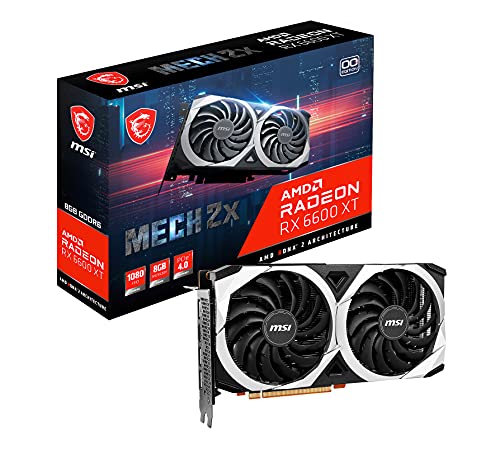
The MSI RX 6600 XT is an excellent budget-friendly graphics card specifically targeted at high-frame-rate 1080p gaming. With a high boost clock of 1845 MHz and 8GB of GDDR6 memory, it is well-suited for popular esports titles where achieving 240 FPS is critical. Its power efficiency makes it a great option for builders who do not want to invest in a high-wattage power supply.
The dual Torx fans provide effective cooling, maintaining performance during long gaming sessions. While it may require some setting adjustments in the most demanding AAA games to hit consistent 240 FPS, it excels in competitive games like Valorant, CS:GO, and Apex Legends. For the dedicated esports player, the RX 6600 XT offers a compelling performance proposition.
ASUS TUF Gaming NVIDIA GeForce RTX 4070 OC Edition
The ASUS TUF Gaming RTX 4070 OC Edition represents the new generation of efficiency and performance. Based on NVIDIA’s Ada Lovelace architecture, it introduces DLSS 3 with Frame Generation, a revolutionary technology that can dramatically boost frame rates beyond what is possible with traditional rendering. This makes it uniquely qualified for achieving super high frame rates in supported titles, often doubling performance.
Despite its modern capabilities, it maintains a relatively low power draw, making it easier to cool and quieter in operation. The robust TUF cooling system and build quality ensure reliability and long-term stability. For gamers who want access to the latest gaming technologies and a power-efficient path to 240 FPS, the RTX 4070 is a forward-thinking and highly effective choice.
MSI Gaming GeForce RTX 4060 Ti 16GB GAMING X SLIM
The MSI Gaming GeForce RTX 4060 Ti 16GB combines the efficiency of the Ada Lovelace architecture with a generous memory buffer. The standout feature is its 16GB of VRAM, which provides significant future-proofing for games with high-resolution textures and assets. While traditionally aimed at 1080p and 1440p, the DLSS 3 technology allows it to perform exceptionally well in high-refresh-rate scenarios.
The GAMING X SLIM design offers a powerful cooling solution in a more compact form factor, making it ideal for a variety of PC builds. The combination of low power consumption, advanced features like DLSS 3, and the large VRAM pool makes the RTX 4060 Ti 16GB a versatile card that can handle today’s games with ease while being prepared for the demands of tomorrow’s titles.
Buying Guide: What to Look For in a Graphics Card for 1080p 240hz Gaming in 2025
So, you want to build or upgrade a PC for 1080p 240hz gaming. I get it; once you have experienced that buttery-smooth motion in fast-paced shooters, it is hard to go back. But hitting a consistent 240 frames per second is a much taller order than just playing a game at 60hz. It is all about raw power and smart features. Here is what I think you should focus on when picking one of the best graphics cards for 1080p 240hz gaming in 2025.
First, let us talk about the GPU itself. The core processing power is the most important factor. You are looking for a card that can push extremely high frame rates without breaking a sweat. In 2025, this means focusing on the upper-mid-range to high-end models from the latest generations. Older flagships can still work, but newer architectures often bring efficiency and feature improvements that are worth the investment. Do not just look at the model name; check independent benchmarks for the specific games you play. A card that is great in one title might struggle in another.
Next up is VRAM. For 1080p, you might think you can get away with 8GB, but I would advise against that for a 240hz target. Modern games are using higher resolution textures even at 1080p, and you need that data readily available in VRAM to avoid stutters. Aim for at least 12GB, with 16GB being a great sweet spot for future-proofing. Running out of VRAM is a surefire way to see your frame times go haywire, completely ruining the smooth experience you are after.
Finally, pay close attention to features that enhance smoothness. Technologies like NVIDIA’s DLSS 3 and AMD’s FSR 3 are game-changers. Their frame generation tech can take a high frame rate, say 150 fps, and effectively double it, making that 240hz monitor feel fully utilized. This is especially useful in more demanding single-player titles where pure rasterization performance might not be enough. Also, ensure your CPU is a strong match. At 1080p, the CPU does a lot of the work preparing frames for the GPU to render. A powerful graphics card will be held back by a weak processor, so balance your build.
FAQ
Is a 240hz monitor worth it for gaming?
In my opinion, absolutely, but it depends heavily on the games you play. If you are into competitive shooters like Counter-Strike 2, Valorant, or fast-paced battle royales, the difference is night and day. The reduced motion blur and near-instant input response give you a tangible edge. For slower, story-driven games, the benefit is less pronounced, though the overall smoothness is still very nice.
Do I need a special cable for 240hz at 1080p?
Yes, you do. You must use a high-quality DisplayPort 1.4 cable or an HDMI 2.1 cable to support 1080p at 240hz. The older HDMI 2.0 standard often cannot handle that bandwidth. I always use the cable that comes with the monitor, but if you need a replacement, make sure it is certified for the required spec.
Can my CPU bottleneck a high-end graphics card at 1080p?
This is a very common issue. At 1080p, the workload shifts more onto the CPU. A powerful graphics card will be sitting around waiting for your processor to prepare the next frame. To get the full performance from one of the best graphics cards for 1080p 240hz gaming in 2025, you should pair it with a modern, high-clock-speed CPU from the upper tiers.
Is ray tracing feasible when targeting 240 frames per second?
Frankly, it is extremely difficult. Ray tracing is incredibly demanding on the GPU. Enabling it, even at 1080p, will cause a massive drop in your frame rate. If you want to use ray tracing, you will need to rely heavily on upscaling (DLSS/FSR) and possibly frame generation to get your frame rate back into a high refresh territory. For pure competitive gaming, most players leave it off.
How much should I expect to spend on a graphics card for this purpose?
The market changes, but for a consistent 240hz experience in 2025, you are looking at the upper-mid-range and high-end segment. This typically means the price point just below the absolute flagship models. It is a significant investment, but you are paying for the specialized performance needed to drive that pixel count so quickly.
Should I wait for the next generation of GPUs?
This is the eternal question. If you need an upgrade now, buy now. There is always something new on the horizon. The current crop of cards from NVIDIA’s RTX 40-series and AMD’s RX 7000-series are more than capable of handling this task. Waiting can sometimes net you a better deal or more performance, but you could be waiting forever.